Cardiometabolic and lifestyle interventions for AFib

Investigators in three trials revealed their findings regarding atrial fibrillation (AFib) and ablation in “Cardiometabolic and Lifestyle Interventions for AFib” on Sunday. They found:
- Dapagliflozin failed to reduce recurrent AFib at three months following catheter ablation.
- Metformin reduced AFib burden by half at 12 months following catheter ablation.
- Caffeinated coffee reduced recurrent AFib at six months after cardioversion.
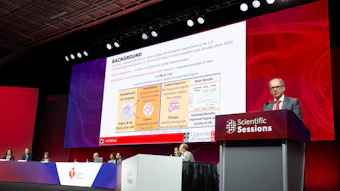
Recent data from observational studies have shown that dapagliflozin is associated with reduced early recurrence of AFib following catheter ablation for patients with concomitant type 2 diabetes, heart failure and chronic kidney disease (CKD). The most recent trial, Dapagliflozin on Recurrence After Catheter Ablation for Atrial Fibrillation (DARE-AF) trial, found that dapagliflozin did not affect early recurrence for patients who had AFib without type 2 diabetes, heart failure or CKD.
 Zixu Zhao, MD
DARE-AF enrolled 200 persistent AFib patients who were scheduled to undergo a first catheter ablation and did not have any established indication for dapagliflozin, including type 2 diabetes, heart failure or CKD.
Patients had a mean age of 58.5 years, 19.5% were women and 29% had persistent AFib with a duration of at least one year. Half of the patients in the open label trial were randomly assigned to receive dapagliflozin once daily for three months; the other half did not.
The primary endpoint was AFib burden at three months assessed by seven-day single-lead ECG patches. Secondary outcomes included time to events, quality of life and improvement in left atrial remodeling.
Three months after catheter ablation, there was no significant difference in the AFib burden, 7.5% in the dapagliflozin group vs. 8.1% in the control group, p=0.48. Atrial arrhythmia recurrence was seen in 29 patients in the dapagliflozin group and 28 patients in the control group for a hazard ratio of 1.11 (95% CI: 0.66 to 1.86, p=0.70) during the blanking period.
There were no significant differences between the two groups in quality of life or left atrial diameter.
“There was also no difference regarding adverse events, including hospitalization for cardiovascular reasons, hypotension, genital infection, the usual cautions with SGLT2s,” Zhao said. “It is not a problem to use dapagliflozin, but we did not see any effect on early recurrence of AFib. However, we remain very confident about its potential, given that a considerable proportion of patients with atrial fibrillation also have heart failure, particularly heart failure with preserved ejection fraction. We believe that a larger, placebo-controlled trial with an extended follow-up period is warranted to more comprehensively evaluate its potential antiarrhythmic benefits.”
DARE-AF was published simultaneously in Circulation.
Metformin reduced recurrent AFib after catheter ablation
A novel intervention with oral metformin reduced recurrent AFib in patients with concurrent AFib and obesity/overweight with no history of diabetes that underwent catheter ablation. Patients taking metformin had a 50% reduction in the risk for recurrent AFib or other atrial arrhythmias compared to patients taking placebo for 12 months after ablation. There were no serious adverse events in the trial.
 Amrish Deshmukh, MD
META-AF randomized 99 patients at the University of Michigan to oral metformin or placebo that were scheduled to undergo catheter ablation. The mean age of patients was 63 years, 70% were male and mean body mass index was 32. None of the patients had diabetes or any other indications for metformin. Patients were randomized to either Metformin or placebo, and all patients received lifestyle modification counseling.
The primary outcome was recurrence of AFib or other atrial arrhythmias lasting more than 30s at 12 months after ablation, following a 3-month blanking period. Secondary outcomes included freedom from atrial arrythmia burden, quality of life, change in weight and change in HbA1C.
At 12 months, significantly more patients taking metformin were free of recurrent atrial arrhythmias, HR 0.5 (95% CI: 0.2 to 0.9, p=0.04). Patients in the metformin arm had half the AFib burden, 8% vs. 18% in usual care.
There was no difference in adverse events between the two groups, Deshmukh reported, and no serious adverse events in either arm.
“Metformin is generally well tolerated,” he said. “The main serious side effect to be concerned about is lactic acidosis in patients with kidney failure or metformin overdose. This is very rare, and there were no occurrences in our trial.”
Drinking caffeinated coffee can reduce AFib after cardioversion
The first randomized trial comparing caffeinated coffee to no caffeine found that drinking at least one cup of caffeinated coffee daily reduced the risk of recurrent AFib by 39% compared to abstaining from coffee and other caffeinated drinks. Most, but not all, observational studies report neutral or beneficial associations of coffee and AFib, although conventional wisdom suggests that caffeine and other lifestyle choices can trigger AFib.
 Christopher X. Wong, MBBS, MPH, PhD
Patients with AFib commonly identify coffee as a trigger for AFib episodes, Wong said. A prior study from the University of California San Francisco showed that about 25% of patients identify coffee as an AFib trigger, second only to alcohol, identified by about a third of patients.
The DECAF trial randomized 200 patients in Australia, Canada and the United States with persistent AFib scheduled to undergo electrical cardioversion to at least one cup of caffeinated coffee daily, based on their usual lifestyle, or no coffee or other caffeinated products.
The mean age of patients was the late 60s, about 70% were male, and the mean body mass index was 30. Cardiovascular comorbidities were common. The median time from AFib diagnosis was two years, and many were on antiarrhythmic medications or had undergone prior AFib ablation.
The primary endpoint was clinically detected recurrence of AFib or atrial flutter lasting at least 30 seconds at six months following electrical cardioversion.
Secondary endpoints included the separate recurrence of AFib or atrial flutter, and adverse events, including major atherosclerotic events, emergency department visits, hospitalization or death.
Individuals who drank at least one cup of caffeinated coffee daily were significantly more likely to be free of AFib over the follow-up period, HR 0.61 (95% CI: 0.42 to 0.89, p=0.10).
Abstinence from caffeine was not perfect with just 69% of those in the abstinence group reporting no coffee consumption over the entire six months. In a specified subgroup analysis, complete abstinence from caffeinated coffee led to HR 0.53 from freedom from AFib (95% CI: 0.36 to 0.78, p=0.002).
There was a lower, nonsignificant reduction in atrial flutter in the abstinence group and no difference between the groups in adverse events.
DECAF was published simultaneously in JAMA.