Inaugural partnership offered insights and a high-impact reveal in the future of HCM treatment

Cardiology is redefining the future of hypertrophic cardiomyopathy (HCM) treatment, leveraging a cross-disciplinary toolkit of basic science, genetics, imaging and surgery. In an inaugural collaborative session between the American Heart Association and the HCM Society, Scientific Sessions 2025 hosted a groundbreaking panel discussion with the leading voices in HCM research and treatment.
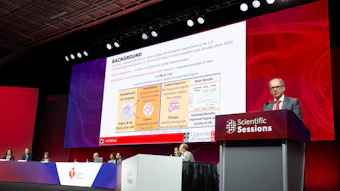
Christine E. Seidman, MD, was among the panelists at yesterday’s session, “Forgotten No More: The Current Belle of the Ball? Breakthrough Evolutions in Hypertrophic Cardiomyopathy.” Seidman is the T.W. Smith professor of medicine and genetics at Harvard Medical School and directs the Cardiovascular Genetics Center at Brigham and Women’s Hospital, both in Boston. Her presentation, “New Therapies Targeting Pathophysiology: Existing Problems Need Modern Solutions?” explored the evolving landscape of the complex and often misunderstood condition as well as the urgent need for early intervention.
“HCM is a disorder that I’ve studied for many decades, and it is caused by either a gene mutation in sarcomere proteins or by what we call ‘unexplained.’ We have a good handle on the different genes that cause HCM,” Seidman said. “For the unexplained, there are clinical manifestations of disease that look exactly like that of patients we know have a definitive pathogenic mutation as the underlying cause. And so right off the bat, we have this paradigm of what we can understand from a very molecular basis.”
Mutations in sarcomere proteins — key components responsible for heart muscle contraction and relaxation — lead to hypercontractility, poor relaxation and increased energy consumption in heart cells, which over time can result in serious complications such as atrial fibrillation, heart failure and even sudden cardiac death, Seidman said.
“The heart never goes into neutral,” Seidman explained. “It’s like a car engine that keeps running even when you’re stopped. That constant energy burn will damage the heart over time.”
This process, she said, is “profoundly impactful,” not on a single day, but over a lifetime. From the registry of patients with HCM, cardiologists know that from the time a patient was clinically diagnosed, it is likely they have had the disease since their teenage years or 20s. As it progresses, patients will likely experience arrhythmias, and in particular, atrial fibrillation, an increased risk of heart failure and eventually end-stage disease requiring transplantation.
Seidman emphasized the importance of genetic testing for anyone diagnosed with HCM or with a family history of the disease. Knowing the genotype helps clinicians assess risk and tailor treatment, she said.
“Precision medicine means the right drug for the right person at the right time,” Seidman said.
Currently, FDA-approved myosin modulators — drugs that help the heart relax and reduce energy consumption — are available for a subset of patients, according to Seidman. However, she advocates for broader use of these therapies earlier in the disease progression to prevent complications such as atrial enlargement and stroke.
Looking ahead, Seidman said gene therapy offers promising potential. Researchers are exploring ways to either supplement deficient proteins or silence harmful gene copies.
“We’re a couple of years away,” Seidman said. “The biggest hurdle is delivering these therapies safely to heart cells.”
Additionally, for patients without a known mutation, Seidman said emerging research suggests a polygenic basis — multiple small genetic variants contributing collectively to disease. These cases may require entirely different therapeutic approaches, she said, underscoring the need for continued research.
As the field of cardiogenetic advances, Seidman’s work highlights a pivotal shift toward personalized care — where understanding the molecular roots of disease can lead to more effective, life-saving interventions.
“Don’t wait for end-stage disease,” she said. “Use genetic insights to guide early, proactive treatment.”
The session also offered a high-impact reveal of early results from a phase I trial targeting gene-positive HCM patients. Milind Desai, MD, MBA, FACC, FAHA, FESC, said his study provides an innovative and less invasive approach treatment.
Desai is a professor of medicine at the Cleveland Clinic in Ohio.
This session informs you what could change the future of HCM care over the next five to 10 years, he said.
According to Desai, the trial focuses on patients with mutations in the MYBPC3 gene, which leads to reduced production of a critical cardiac protein. The therapy involves a one-time infusion of corrected DNA into a modified virus and delivers it directly to the heart. Once there, the DNA is transcribed into RNA and then into the missing protein, potentially reversing the disease’s progression. The virus and delivery mechanism are designed to dissipate safely through the liver, with patients closely monitored for both efficacy and safety.
“The goal is to either cure or significantly slow down the disease,” he said.
Desai said the therapy does not alter a patient’s inheritable genetics, making it a personalized and nontransmissible solution.
“We’re watching for improvements in heart wall thickness, stiffness and overall quality of life,” he said.
The session also featured insights into HCM research and treatment, including advanced imaging, the latest data on cardiac myosin inhibitors and a pioneering beating-heart surgical myectomy technique.
In a unique and humanizing touch, the session included a patient speaker, offering a firsthand perspective of living with HCM and the promise of emerging therapies.