Ardem Patapoutian, PhD, delivers Nobel Laureate lecture
He won a 2021 Nobel Prize for the discovery of PIEZO ion channels.
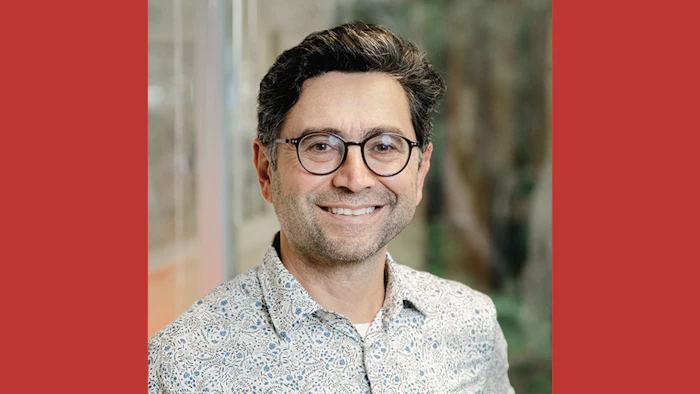
When Ardem Patapoutian, PhD, and his laboratory team initially discovered PIEZOs in 2010, they were not expecting to uncover the extensive functions they hold throughout the human body.
“Our primary goal was to understand how cells sense mechanical stimuli at the molecular level,” Patapoutian said in Sunday’s Nobel Laureate Address. “We did not anticipate the breadth of impact these channels would eventually have across physiology and medicine.”
Patapoutian, co-recipient of the 2021 Nobel Prize in physiology or medicine, discussed highlights of the scientific breakthrough in his presentation, “May the Force Be With You: PIEZO Ion Channels as Essential Pressure Sensors for Touch, Pain, Blood Pressure and Beyond.”
PIEZO ion channels are proteins that sense mechanical changes to the environment and activate signals to the brain. They operate at the molecular level and are critical components of myriad physiological processes, including respiration, urination and digestion, and biological processes such as wound healing and bone density regulation.
Within the cardiovascular system, PIEZOs are involved in baroreception — the detection of changes in blood pressure that helps the body regulate it.
“One of the most exciting downstream applications has been the growing body of research connecting PIEZO1 to vascular biology and red blood cell volume regulation, as well as PIEZO2 to respiratory reflexes, bladder function and proprioception,” said Patapoutian, who is professor in the department of neuroscience at Scripps Research in La Jolla, California, and a Howard Hughes Medical Institute investigator.
This groundbreaking work lit the scientific world ablaze, sparking translational research to develop targeted therapeutics for health conditions such as hypertension and chronic pain, along with other iterative studies building on the novel findings.
But Patapoutian, who said he never imagined winning a Nobel, reminded attendees of the power of wonder and perseverance.
“I hope people walk away inspired by how curiosity-driven science can illuminate entirely new aspects of human biology, often in unexpected ways,” he said.
During the lecture session, attendees heard from two other speakers who provided similar points of view from their related research. Kristy Red-Horse, PhD, presented “Sensing of Mechanical Forces in the Heart and Coronary Artery Development,” and Charles Cox, PhD, presented “Toward Therapeutic Peptides Targeting PIEZO Channels.”