Sex matters: Advancing women’s health
Association President Stacey E. Rosen delivers a powerful call to action to close the gender gap in cardiovascular care and research.

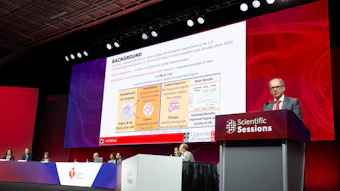
In a sweeping address that wove history, science and personal reflection, Stacey E. Rosen, MD, FAHA, used her presidential lecture Sunday to spotlight the decades-long disparity in cardiovascular research and care between men and women — and to urge the field to make women’s health an equal scientific priority.
“In the fall of 1992, at a hospital in New York City, two babies were born, around the same time, on the same day,” Rosen began. “One of those babies was a girl. The other was a boy.” She explained that the difference between the two — a single chromosome — would determine not only much of their biological trajectory, but also how science and medicine would come to understand their hearts.
“The boy would be the beneficiary of decades of research, prevention strategies, treatment options and life-saving innovations geared to his biologic sex,” she said. “The girl? Eh, not so much.”
From the 1940s through the 1980s, cardiovascular research was primarily conducted on men, a bias that would shape generations of diagnostic and treatment standards. “Up until approximately the time those kids were born, it was believed that human hearts were human hearts,” Rosen said. “Scientists could study the hearts and brains of men and simply apply any findings to women.”
That assumption persisted for decades, as major population studies included only men. Even when women were included, their data were often underpowered or misinterpreted.
It wasn’t until the 1980s that data began revealing a devastating truth: While cardiovascular mortality was dropping among men, it was actually rising for women.
“For the first time, more women were dying of heart disease than men. And worse yet, the gap was widening,” Rosen said. “All those years of either ignoring women or presuming that women’s hearts were the same as men’s had caught up to us.”
That wake-up call sparked a series of pivotal initiatives, from Dr. Nanette Wenger’s 1986 workshop on women’s coronary disease to the establishment of the NIH Office of Research on Women’s Health in 1990. Even so, progress was slow.
She cited the TIMI IIIB trial of the mid-1990s as one of the first to reveal meaningful differences. “Twenty-five percent of the women who had myocardial infarctions had no obstructive lesions at all,” she said. “A full quarter of these women diagnosed with myocardial infarction did not have what we historically equated with coronary heart disease. In the drip-drip-drip of progress, this was one of the first splashes.” Over time, those splashes became a flood of new understanding. New studies proved that women’s cardiovascular physiology and risk factors could not simply be mapped from men’s data. “We learned that our traditional diagnostic tests did not work particularly well for women,” Rosen said, adding that many unanswered questions remain about sex-specific risk factors, from migraine with aura to sudden cardiac death.
Rosen framed the evolution of science through the lives of those two babies born in 1992 — her own children, Rebecca and Max. “They arrived when the ‘male model’ was the default,” she said. “Now they are 33 years old. Should either develop any of these health problems, science is prepared to deliver more precise care — care that is more appropriate to their biologic sex.”
She closed with a challenge for the entire scientific community — men and women alike — to become active participants in advancing women’s health.
“For too long, women’s health has been considered the domain of women scientists and clinicians,” she said. “Improving the health of women won’t work without men. The women trying to answer these critical questions don’t need men merely as allies … what we really need are men as advocates. Better still, we need men as accomplices.”
Her final challenge: “When you go back to work, in all that you do, ask yourself and your colleagues: How does sex matter?”
Awards recognize health excellence
Each year, the American Heart Association recognizes a select group of health professionals for their outstanding achievements in science, research and mentorship. This year’s recipients, announced at the Presidential Address, are:
Amit Khera, MD, MSc, FAHA | Chairman’s Award
Peter Tontonoz, MD, PhD | Basic Research Award
Barbara Riegel, PhD, RN, FPCNA, FHFSA, FAHA, FAAN | Clinical Research Award
Daniel Lackland, MSPH, DrPh, FAHA | Population Research Award
Emelia Benjamin, MD, ScM, FAHA | Eugene Braunwald Academic Mentorship Award
Judith Hochman, MD, FAHA | Research Achievement Award